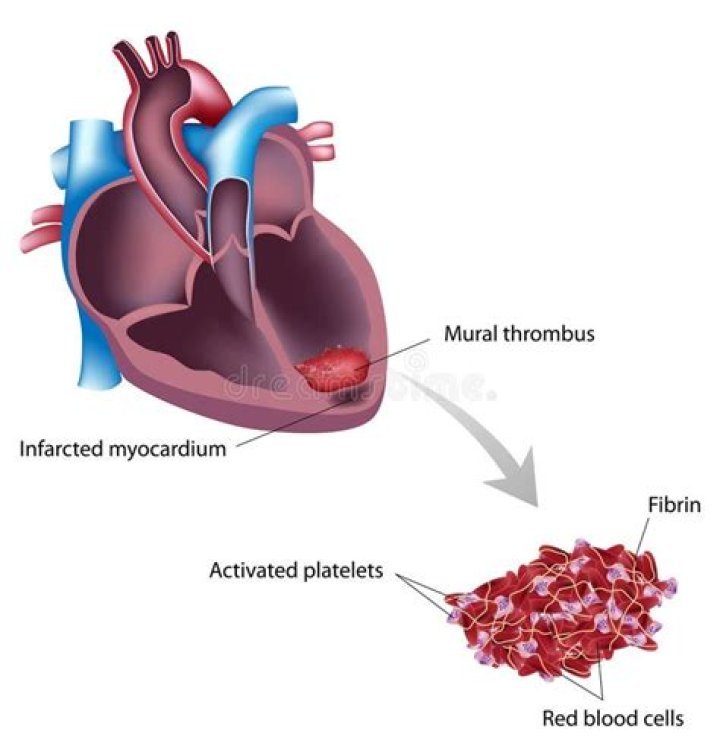
What is apical thrombus?
 Rachel Hickman
 For the purpose of this paper our definition of an apical mural thrombus is a distinct mass of echoes, most commonly seen in the apex throughout the cardiac cycle, and in more than one view. Mural thrombi are most commonly seen between six and 10 days following an acute myocardial infarction (MI).
What is the ICD 10 code for LV thrombus?
ICD-10-CM Code for Intracardiac thrombosis, not elsewhere classified I51. 3.
What is the ICD 10 code for left atrial appendage?
02L70ZK
Occlusion of Left Atrial Appendage, Open Approach ICD-10-PCS 02L70ZK is a specific/billable code that can be used to indicate a procedure.
What is the ICD 10 code for CVA?
Acute cerebrovascular insufficiency The 2022 edition of ICD-10-CM I67. 81 became effective on October 1, 2021. This is the American ICD-10-CM version of I67.
What causes an apical thrombus?
A Virchow’s triad of factors – reduced ventricular motion, local myocardial injury and hypercoagulability/stasis of flow contribute to formation of LV thrombus. Reduced ventricular contractility – Blood stagnation in the weak non-contractile segment of the ventricle plays a major role in formation of thrombi.
What is a left atrial thrombus?
The left atrial thrombus is a known complication of atrial fibrillation and rheumatic mitral valve disease, especially in the setting of an enlarged left atrium. If not detected and properly treated, it can lead to devastating thromboembolic complications.
What is the ICD 10 code for hypercoagulable state?
2022 ICD-10-CM Diagnosis Code D68. 5: Primary thrombophilia.
What is right ventricular thrombus?
Right heart thrombi are uncommon, usually found with concurrent pulmonary emboli and associated with significant mortality. They are often “in transit,” originating from deep vein thrombi but may also be due to primary intracardiac processes such as heart failure, devices, and atrial fibrillation.
What is left atrial appendage thrombus?
Left atrial appendage thrombus occurs when blood coagulates in this tiny pocket, putting a person at risk for cerebral stroke or peripheral embolism.
How is LV thrombus treated?
Intravenous thrombolysis has also been used for treatment of documented LV thrombus. In a report of 16 patients with LV thrombus on echocardiography, urokinase was infused intravenously at a rate of 60 000 U/h for 2–8 days in combination with intravenous heparin (200 units/kg×12 h).
When do you code a CVA?
Acute stroke codes are only appropriate during the acute event, such as in the doctor’s office when the patient is experiencing acute right-sided weakness with aphasia, for which an ambulance is summoned, or during the inpatient admission for the acute CVA.
What is the ICD-10 code for old CVA?
When a patient has a history of cerebrovascular disease without any sequelae or late effects, ICD-10 code Z86. 73 should be assigned.
What is the ICD 10 code for thrombosis?
ICD-10-CM Diagnosis Code I23.8 Thrombosis, thrombotic (bland) (multiple) (progressive) (silent) (vessel) I82.90 ICD-10-CM Diagnosis Code I82.90 ICD-10-CM Codes Adjacent To I23.6 Reimbursement claims with a date of service on or after October 1, 2015 require the use of ICD-10-CM codes.
What is the ICD 10 code for thombos of atrium?
I23.6 is a billable/specific ICD-10-CM code that can be used to indicate a diagnosis for reimbursement purposes. Short description: Thombos of atrium/auric append/ventr as current comp fol AMI. The 2018/2019 edition of ICD-10-CM I23.6 became effective on October 1, 2018.
What is the ICD 10 code for lumbar radiculopathy?
I23.6 is a billable/specific ICD-10-CM code that can be used to indicate a diagnosis for reimbursement purposes.
What is the ICD 10 code for left subclavian vein thrombosis?
Acute thrombosis of left subclavian vein; Left acute thrombosis of subclavian vein; Thrombosis subclavian vein, acute, left ICD-10-CM Diagnosis Code I82.B22 [convert to ICD-9-CM] Chronic embolism and thrombosis of left subclavian vein


