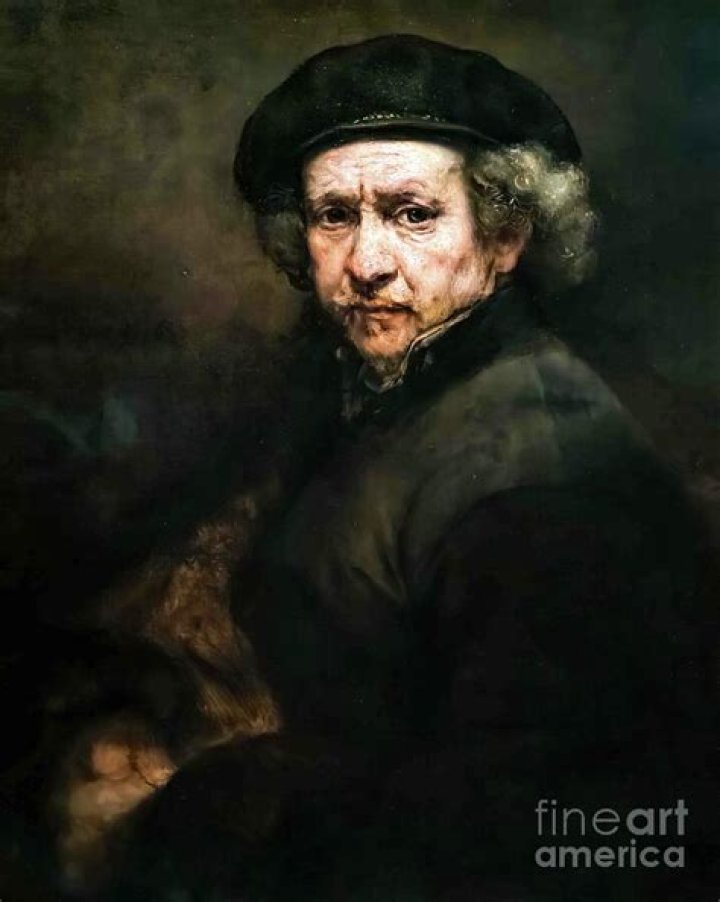
What was the purpose of the self portrait created by Rembrandt van Rijn?
 Olivia Norman
 While Rembrandt’s self-portraits reveal much about the artist, his development, and his persona, they were also painted to fulfill the high market demand during the Dutch Golden Age for tronies — studies of the head, or head and shoulders, of a model showing an exaggerated facial expression or emotion, or dressed in …
What technique did Rembrandt use in his self portrait?
The heavy viscosity and slow drying time of oil paint makes it a suitable medium for impasto painting technique. Watercolor and tempera paint are not satisfactory for this technique because they lack these properties and do not form continuous films surrounding pigment particles.
How much is the self portrait of Rembrandt worth?
Rembrandt self-portrait sells for a record $18.7 million at Sotheby’s – CNN Style.
What is the description of self portrait by Rembrandt?
Self-Portrait is a 1660 oil on canvas painting by the Dutch artist Rembrandt, one of over 40 self-portraits by Rembrandt. Painted when the artist was fifty-four, it has been noted as a work in which may be seen “the wrinkled brow and the worried expression the troubled condition of his mind”.
What is Rembrandt best known for?
Painting
PrintmakingDrawing
Rembrandt/Known for
Why was Rembrandt so important?
Rembrandt is also known as a painter of light and shade and as an artist who favoured an uncompromising realism that would lead some critics to claim that he preferred ugliness to beauty. Early in his career and for some time, Rembrandt painted mainly portraits.
What is Rembrandt technique?
Rembrandt van Rijn revolutionized painting with a 3D effect using his impasto technique, where thick paint makes a masterpiece protrude from the surface. Scientists have now found out how he did it.
What was Rembrandt style?
Baroque
Baroque paintingDutch Golden Age
Rembrandt/Periods
Who Stole the Mona Lisa and why?
Vincenzo Peruggia (8 October 1881 – 8 October 1925) was an Italian museum worker, artist, and thief, most famous for stealing the Mona Lisa on 21 August 1911….
| Vincenzo Peruggia | |
|---|---|
| Died | 8 October 1925 (aged 44) Saint-Maur-des-Fossés, France |
| Nationality | Italian |
| Occupation | Artist |
| Known for | theft of the Mona Lisa |
Are Rembrandt prints valuable?
After years of art production and financial troubles, Rembrandt died in Amsterdam in 1669. Your Rembrandt print does not need to have a signature, monogram or other mark to be valuable either. Rembrandt’s prints–originals and restrikes– have sold in the range from $5,000 to $150,000.
What is Rembrandt known for?
What was Rembrandt greatest accomplishment?
One of Rembrandt’s biggest contributions was his transformation of the etching process from a relatively new reproductive technique into a true art form. His reputation as the greatest etcher in the history of the medium remains to this day.
How many portraits did Rembrandt do?
Rembrandt van Rijn. In more than 90 portraits of himself that date from the outset of his career in the 1620s to the year of his death in 1669, he created an autobiography in art that is the equal of the finest ever produced in literature even of the intimately analytical Confessions of St.
Who was Rembrandt’s father?
Rembrandt Harmensz van Rijn, born in Leiden on July 15, 1606, was the son of a miller, Harmen Gerritsz van Rijn, and his wife, Neeltgen van Zuytbrouck. The youngest son of at least ten children, Rembrandt was not expected to carry on his father’s business.
What did Jacob Rosenberg say about Rembrandt’s self portraits?
In an influential 1948 monograph on the artist, Jacob Rosenberg wrote of the ceaseless and unsparing observation which [Rembrandt’s self-portraits] reflect, showing a gradual change from outward description and characterisation to the most penetrating self-analysis and self-contemplation.
What inspired Rembrandt’s pose?
Rembrandt’s pose was inspired by Raphael ’s famous portrait of Balthasar Castiglione, which he saw at an auction in Amsterdam in 1639. In this late self-portrait, Rembrandt returned to Raphael’s prototype because its dignified pose enabled the artist to present himself as a learned painter.


